

Caste in Stone
The culture, complexities, and stubborn persistence of India's caste system

Jamie Paul here. This essay is a guest post by Anwesh Satpathy, but I also wanted to share a recent conversation I had with Sandeep Kaushik and David Hyde on the Blue City Blues podcast, where we discussed my Memory-Hole Archive series. You can listen here.
In December 2025, a video of a 21-year-old woman named Aanchal Mamidwar marrying the corpse of her boyfriend by applying turmeric in the traditional Indian manner went viral in India. Her lover, Saksham Tate, belonged to the Dalit community — the so-called “untouchable” caste historically placed at the bottom of India’s regimented caste system. Saksham was murdered by Aanchal’s family, who disapproved of her relationship with a lower-caste man. Aanchal, speaking to the Times Of India, defiantly declared, “They killed him brutally, but they lost. My lover won, even in death.”
Such tragic events are not rare in India, where honour killings continue to occur periodically. It is difficult to find exact statistics, but the available data suggests that honour killings seem to be higher in regions where the rate of inter-caste marriage is greater.1 As is too often the case in India, girls and young women are seen as the repository of the family’s “honour.” In rural areas where life is virtually impossible without interactions with fellow villagers, inter-caste marriage can lead to a boycott of the lower-caste family by neighbours, especially when a lower-caste man marries a higher-caste woman. It is for this reason that families often hold public ritual mock-funerals to disown their daughters who married outside the caste against their parents’ wishes.
The brutality but also complexity of the Indian caste system has no true analog in the West, although racial segregation comes closest. It may be for this reason that the caste system is seldom discussed — and almost never accurately — in the Western world. It is simply not possible to grasp caste and its impact on Indian society without first exploring its origins, manifestations, and intricacies.
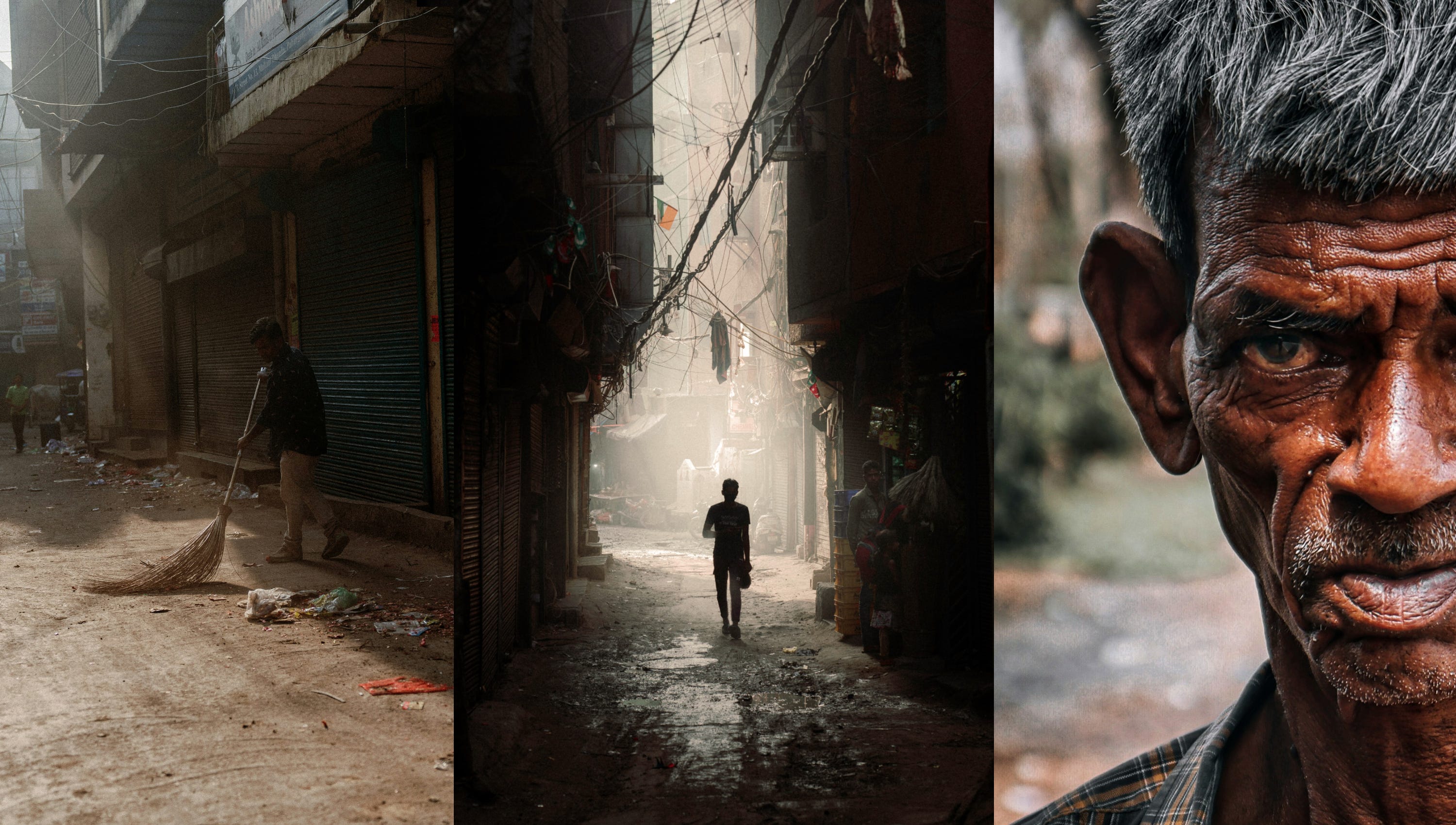
There is perhaps no social issue whose solutions are as intimately tied to an understanding of its origins as caste. The Indian caste system is a hierarchical system of graded inequality. The Brahmins, or the priestly caste, occupy the top position. They are followed by the Kshatriyas, or royalty and warrior class. The Vaishyas are merchants and at the bottom are the Shudras, or workers, whose prescribed task is to serve the other three castes. Outside of this fourfold system are the Dalits, or the “untouchable” caste, condemned by birth to the menial tasks of sweeping, butchery, manual scavenging, and so forth. They have been referred to as the “untouchables” because a higher-caste person is thought to be defiled simply by touching them. To this day in many parts of India, the upper castes still take a bath for ritual purification after accidentally coming into contact with Dalits. In more extreme cases, Dalits are thrashed for using the same public facilities to bathe as the upper castes.
This raises the question: how do Indians even know other people’s caste? The most reliable way of identifying one’s caste in contemporary contexts is through surnames. However, surnames vary between states. An individual living in the eastern state of Odisha is unlikely to know what surname qualifies as a Brahmin or a Shudra in the western state of Gujarat. Moreover, surnames associated with Brahmins in one region may be associated with Dalits in another. This is the reason why one witnesses the most extreme caste atrocities in tightly-knit rural communities, where one’s caste is unmistakable. Urban areas like Mumbai, on the other hand, partly if not entirely obscure such instant recognition, owing to migrants from all states.
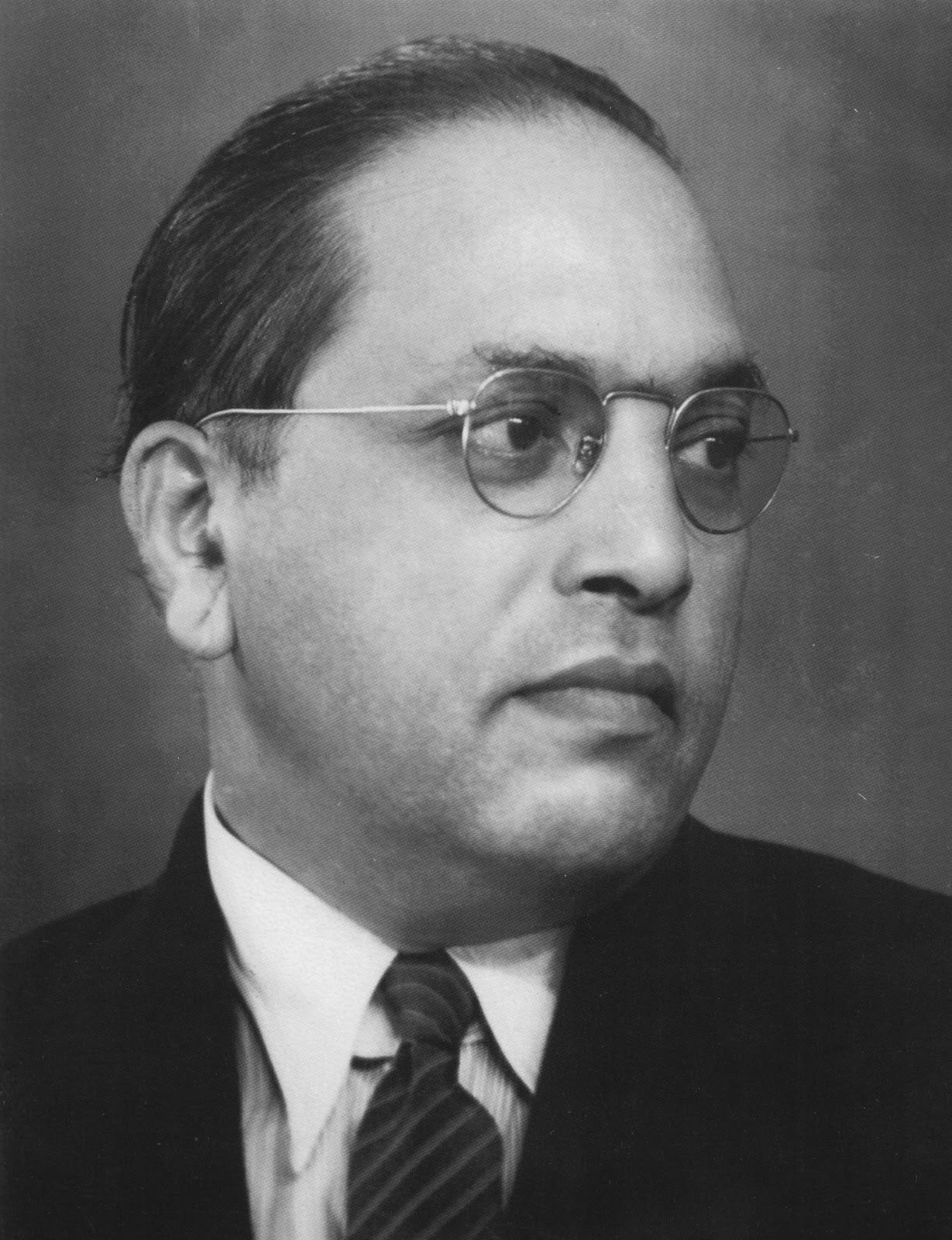
What gives legitimacy to such an inhumane system? The simplest explanation was given by Dr. B.R. Ambedkar, the economist and lawyer whose name has become synonymous with the Indian Constitution on account of his role as chairman of the drafting committee. Ambedkar, who belonged to the Dalit community, considered Hinduism to be a “veritable chamber of horrors.” The doctrine of karma posits that the suffering one undergoes in their present life is a consequence of the actions of one’s previous life. In other words, one is born a Dalit for the sins of their previous life, while being born into an upper-caste family is seen as a reward for the good deeds of one’s previous life. The caste system can be understood partly as a division of labour, though not one that is born out of choice but forced by circumstances of birth.
Caste, in this sense, Ambedkar contends, is a form of slavery that poses a threat to liberty. A society in which the conduct, livelihood, and moral status of some groups is determined by the dictates of another cannot be said to be a truly free society. Citing the ancient Hindu legal text Manusmriti, Ambedkar argues that the caste system derives its validity from religious scriptures and that the annihilation of caste is not possible without also destroying the sanctity of such religious texts and thus destroying Hinduism itself.
It is important to note that Ambedkar’s call to destroy Hinduism is not a call to eradicate religion. He was not interested in Hindu theology as such except for strictly historical and sociological analysis. The heavy influence of his professor at Columbia University, the pragmatist philosopher John Dewey, is palpable in Ambedkar’s discourse. Hinduism, in the Ambedkarite analysis, came to be defined primarily by rules and codes instead of principles, making Hindu society susceptible to practice religion as a matter of obedience and submission rather than through sustained reflection. In Deweyan terms, Hinduism had lost its social efficiency. Ambedkar grants that strands of Hindu theology are not only compatible with liberty but have “greater potentialities for producing social democracy than the idea of fraternity.” Nevertheless, Hinduism as it exists experientially often does not respect the lofty ideals found in the Upanishads but rather the caste structure reminiscent of the Manusmriti.

But the justifications for the caste system do not explain how it has endured well into the 21st century. The persistence of caste is due less to theology and more to societal structure. Caste is a reality not just in Hindu society but in South Asia as a whole. In Pakistan, caste retains its feudal structure and has noticeable overlap with class. The caste pride that many groups flaunt is less reminiscent of any scriptural sanctions as much as it’s shrouded in the language of pride in having “warrior blood”, as is the case with Rajputs across India and Pakistan, or Muslim Sayyids who claim descent from the family of the Prophet. The Scheduled Castes (the constitutional term for Dalits) in Pakistan do not own land for either cultivation or shelter. They are engaged in a vicious and never-ending cycle of debt slavery. Much like their Indian counterparts, castes like the Mochi (traditionally cobblers) and Bhangis (sweepers) are residentially segregated from their upper-caste fellow-Muslim counterparts. The Dalit Hindus of Pakistan, who face both caste-based discrimination by the upper-castes and religious discrimination by the Muslim majority, are often denied access to places like barbershops and restaurants.
Two defining features of the caste system can be gleaned from its manifestation in contemporary South Asia: the prevalence of endogamy (marrying within one’s tribe, or in this case, caste) and the attendant doctrine of purity and pollution. Segregation is rarely defended in any explicit way as a means of preserving scriptural sanctity in modern India; it is instead disguised in the language of cleanliness. In Anand Patwardhan’s masterful 2011 documentary on caste, Jai Bhim Comrade, the upper-caste interviewees are seen justifying segregation on account of the Dalits being so “filthy”, “stinking”, and “dirty” that they are recognisable through smell. As research in social psychology has found, disgust sensitivity forms the basis of much of our cultural and social taboos. Given that these taboos are invoked more through instant intuitions and less through elaborate reasoning, it is not surprising that studies confirm that higher disgust sensitivity makes it easier to dehumanise. The Nazis exploited this trait extensively in their propaganda, depicting Jews as parasites, locusts and worms. It is this instinctual sentiment of disgust that facilitates the upper-caste’s dehumanisation of the Dalits. This is further complicated by the fact that many Dalits are forced into negative stereotypes and condemned to jobs like sweeping simply based on the accident of their birth.
While the practice of untouchability was formally abolished and is heavily penalised by the Indian Constitution, the culture has proven harder to legislate. The most widespread manifestation of caste that transcends the divide between rural and urban areas is endogamy. The breakdown of the strict division of labour in industrialised areas has also helped make caste partially invisible. Still, some progress has been made. Increased mobility between states often means that people don’t know the caste of the individual they interact with. Likewise, affirmative action, known as “reservation” in India, has ensured that Dalits and the Backward Classes are represented in proportion to their population across institutions, including in Parliament, the public sector, and educational institutions.
And yet, endogamy is where the reality of caste becomes salient in even urban areas. Only around 10 percent of marriages in India are inter-caste. The majority of marriages — 90 percent according to some surveys — are “arranged marriages.” It is the family that takes a major role in finding the bride. And a cursory glance at the matrimonial section of major newspapers will show caste as a non-negotiable criterion for most people. “Love marriages” — marriages via the general dating route — are looked down upon. While the Constitution protects individual choice for marriage, the western state of Gujarat (Prime Minister Modi’s home state) has been seriously considering introducing a clause that makes it mandatory for couples seeking marriage to get permission from their parents. This comes on the heels of another state making it mandatory for live-in couples to register their relationship with the authorities, failing which they shall be subject to fine or three months imprisonment.
Taboos on inter-caste relationships are so entrenched that they’re a feature even in same-sex relationships. The gay/bi dating app Grindr, for instance, has profiles explicitly flaunting dominant caste identities like Gujjars and Jats while others mention “no SC/ST and only Brahmins.” Even in non-heterosexual relationships, casteism is shrouded in the language of cleanliness, with stereotypes of Dalits being smelly and dirty.
Despite the preponderance of endogamy, there is considerable debate on its importance in the caste system and whether it is a relatively late addition. Ambedkar explicitly discarded the then-fashionable eugenics theories to instead focus on its social structure. He saw endogamy as a symptom but not the cause. The alternative ideas proposed do not ignore endogamy as much as note it as a recent development. The most prominent voice among these is the historian Nicholas Dirks, who traces caste in its contemporary manifestation to British administrative exercises to categorise social groups, arguing that the British Empire’s seemingly neutral ethnographic census of India calcified previously fluid categories. This was not due to any impulse toward reform. The British were in fact hesitant to take legal measures as a remedy for the social inequalities produced by caste, and often incorporated caste into law to appease high-caste Hindus. This was a way of, in the words of Sir Thomas Munro, “strengthening […] the attachment of the natives to our [British] government by maintaining their ancient institutions and usages.” As the journalist Manoj Mitta points out in his brilliant survey of caste through law, the British reinterpreted medieval laws intended to punish British lower classes to suit the Indian context of lower castes instead. Thus, people were put in stocks as punishment for trivial offences and the severity of their punishment depended not on the nature of their offence but on their caste identity. It was laws like these, some argue, that have restricted mobility between castes while creating frozen categories.
The Marxist historian Irfan Habib, while not disagreeing with Dirks’ thesis, presents caste as a social division of labour that undergoes multiple transformations over time. In Habib’s telling, caste became hardened not merely through Brahminical (i.e. Hindu) norms but also through the development of Buddhism and the advent of Islam. The doctrine of karma acquired a renewed lease through its centrality to the Buddhist faith while Buddhist texts, through their aversion to communities engaged in hunting and butchering animals, denigrated the peasant class. Habib, much like Dirks, does not discard endogamy but also does not emphasise it as a causal factor.
The question of endogamy can be easily settled if one looks at the genetic data. The geneticist David Reich has found that the degree of differentiation between various jatis (subcastes) is three times greater than that of their European counterparts. Reich concludes that Indians faced population bottlenecks around three-to-two thousand years ago, similar to those experienced by Ashkenazi Jews. A population bottleneck happens when a small number of individuals have many offspring and remain isolated from surrounding peoples owing to geographical, environmental, or social factors. This results in the “founder effect”: loss of genetic variation and increased inbreeding. The severity of this can be glimpsed from the fact that population bottlenecks among Baniyas in Uttar Pradesh and Gujjars in Jammu and Kashmir are 10 times higher than that of Ashkenazi Jews. It is difficult to dispute that endogamy has played an enormous role in caste, given the fact that its prevalence has become a major cause of recessive diseases in India.
It’s clear from the available genetic evidence that endogamy in caste is not a recent creation, as Dirks argues. The existence and defining features of caste can be traced back at least two thousand years. Yet, it is indeed the case that the expanding list of Scheduled Castes in India may include castes whose status as Dalits is relatively recent (a few centuries old as opposed to over a thousand years). Nevertheless, endogamy is what sustains caste, which means the annihilation of caste is not possible without a social revolution from below. Only when exogamy becomes the norm will caste distinctions, at long last, begin dissipating to the point of triviality. There has been great progress made in the years since Indian independence, but the dreams of Ambedkar to uproot the caste system as a whole still seem distant.
See also: “The Depopulation Bomb Isn’t Ticking, It’s Overblown”
Subscribe now and never miss a new post. You can also support the work on Patreon. Please consider sharing this article on your social networks, and hit the like button so more people can discover it. You can reach me at @AmericnDreaming on Twitter, @jamie-paul.bsky.social on Bluesky, or at AmericanDreaming08@Gmail.com.
India’s National Crime Record Bureau (NCRB) has only begun recording honour killings as a distinct category of crime since 2014. One government report found that from 2020–2022, there were 76 honour killings across India, though experts have pointed out that these crimes tend to be underreported and that the NCRB’s data collection and categorisation are “unreliable and partial.” The result is likely a substantial undercounting of the number of honour killings.
 | A guest post by
|
Great article
This is a great piece but I think it could benefit from a global comparison.
You mention in passing anti-discrimination legislation and reservations in India - the very fact that there are reservations is remarkable on a comparative level and they have actually made a difference. The situation of the Dalit in India has improved. Take for example the situation of minorities in the Muslim world post-WWII, which has deteriorated almost everywhere.
While untouchability (and certainly caste) are embedded in many Hindu texts, there is also a history of Hindu rejection of the idea of untouchability and caste. There's Basava and even before that others who interpret Brahminism as defined by deeds, not acts. In other words, you could take these concepts out of Hinduism and it would still be Hinduism. It's worth comparing it to anti-Jewish hate in Christianity and Islam. Christianity and Islam both define themselves as the "true" Jews in a sense, adopting Jewish ideas but rejecting Jews themselves. Therefore taking out the antisemitic content would require taking out the Jewish content - and would empty Christianity and Islam of meaning. To put it in fancy academic language - antisemitism is constitutive to Christianity and Islam in a way that untouchability is not to Hinduism.
Finally, at least in India (not so in Pakistan) the laws are there but lack of enforcement is a huge issue. The United States created a huge legal apparatus after the civil rights movement in order to see justice done. India needs something similar (among other things).