


This article is a guest post by Rio Veradonir
More than 20 years ago, the neuroscientist and philosopher Sam Harris made a political prediction that now reads less like a warning about where liberal democracies might be headed and more like a description of the trap they have spent much of this century walking into.
In his 2004 book The End of Faith, Harris argued that liberals had developed a dangerous blind spot toward religious extremism, particularly Islamism. Two years later, in an essay ominously titled “The End of Liberalism?”, he made the political stakes more explicit. Liberals, he argued, were becoming so concerned with religious tolerance, and so reluctant to appear prejudiced toward Muslims, that they were losing the ability to speak clearly about the ideological threat posed by Islamist extremism.
Harris was himself emphatically not offering the religious right as the solution, taking pains to establish his liberal credentials including support for same-sex marriage, drug decriminalization, higher taxes on the wealthy, and warning about the dangers of religious conservatism. His fear was precisely that the liberal failure to address the problems with the Islamist right would strengthen hard-line nativists and the Christian right.
That distinction is what makes his warning look so remarkably accurate today. One need not agree with everything Harris has written about Islam to recognize how strikingly prescient he was about this particular political dynamic. The danger was never simply that Islamism would persist, but that one form of illiberalism would become politically useful to another. If liberals became unwilling to distinguish between defending Muslims from prejudice and defending Islamic doctrines from criticism, voters frightened by Islamist extremism would eventually look elsewhere. And waiting for them would be political actors perfectly willing not only to discuss the problem, but also to blame Muslims collectively, restrict immigration on religious grounds, abandon civil liberties, and exploit fear in pursuit of their own illiberal politics.
20 years later, Harris’s warning hasn’t merely come true; the dynamic he identified has become one of the defining features of contemporary politics. The process plays out time and again like this:
Islamic extremism provokes legitimate alarm.
Broad swaths of the left minimize it, rationalize it, or redirect attention toward Western culpability.
That failure creates an opening for the populist right, which acknowledges the threat of Islamism but bundles that recognition with xenophobia, collective blame, and authoritarian politics.
The resulting right-wing excess then confirms the left’s suspicion that concern about Islamism was really bigotry all along.
And around it goes.
Islamism was an early and particularly consequential arena in which this toxic feedback loop became visible. The politics of immigration and national identity that grew around it would help fuel the rise of a post-liberal right across Western democracies. But the underlying principle reaches well beyond Islam: when significant parts of the left abandon liberal principles and ignore political problems that everyday citizens can see with their own eyes, they empower illiberal actors on the right. Those actors, in turn, strengthen the illiberal left by appearing to vindicate its darkest suspicions. Meanwhile, the much larger number of people who retain broadly liberal values find themselves increasingly drowned out as politics and institutions ping-pong between the two. Each extreme becomes the other’s best argument.
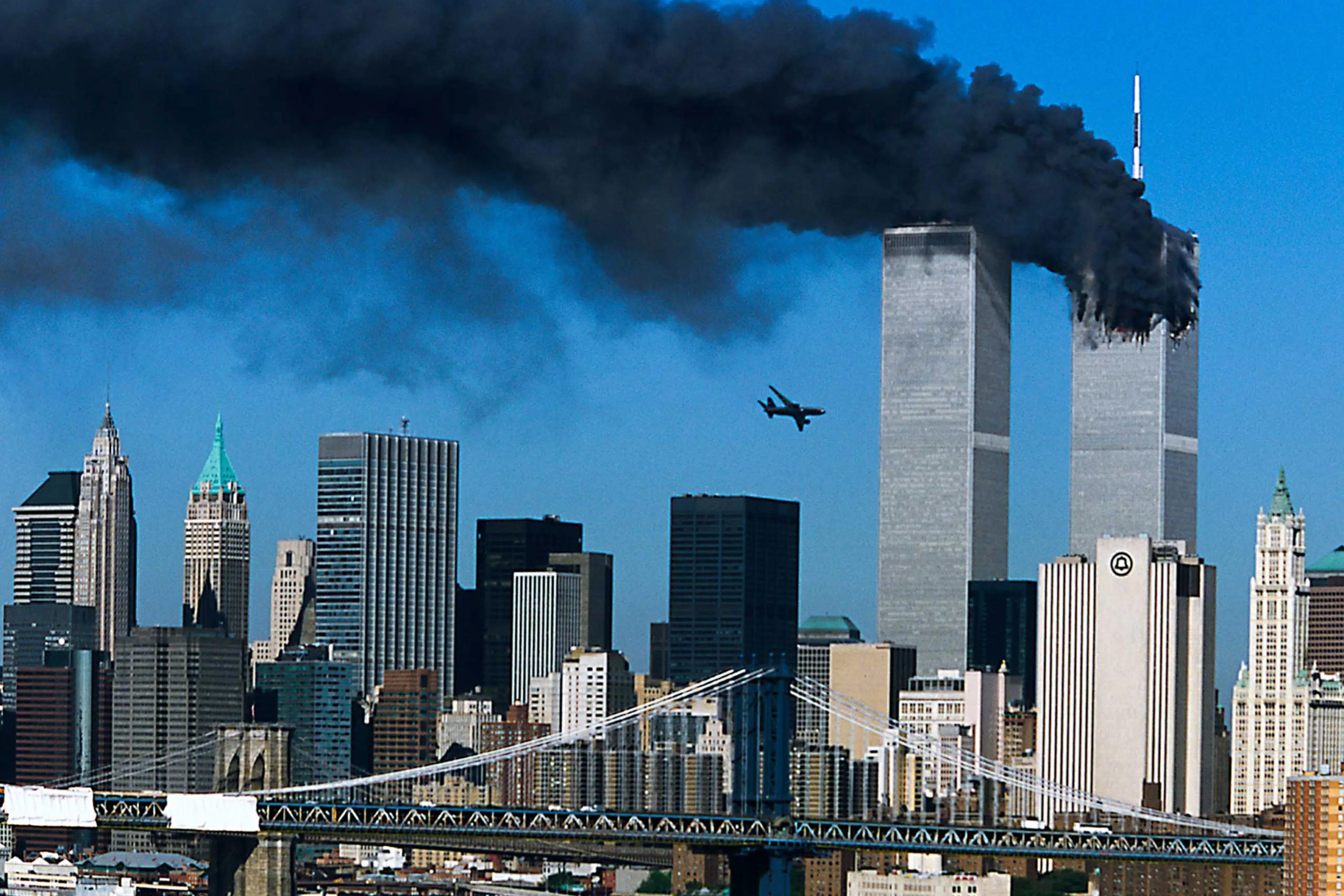
The World Trade Center attacks of September 11, 2001 presented liberal societies with two obligations that should never have been contradictory: protect Muslim citizens from collective blame, and confront an explicitly Islamist movement that had just murdered nearly 3,000 people. Instead, the politics of the era often encouraged people to choose between them. The right supplied plenty of evidence for liberal fears. The response to jihadist terrorism became entangled with the Iraq War, the use of torture, expansive surveillance of the public, suspicion of Muslim communities, and an increasingly xenophobic right-wing politics. The distinction between Islamism, a political and religious ideology, and Muslims, nearly two billion diverse human beings, was frequently obliterated.
But parts of the intellectual left developed their own difficulty maintaining the distinction. Criticism of Islamic doctrines or Islamist movements often became suspect, interpreted through frameworks of racism, colonialism, or the oppression of groups regarded as “marginalized.” The liberal desire to protect Muslims from bigotry shaded into a reluctance to confront illiberalism when its perpetrators belonged to groups who are minorities within the West.
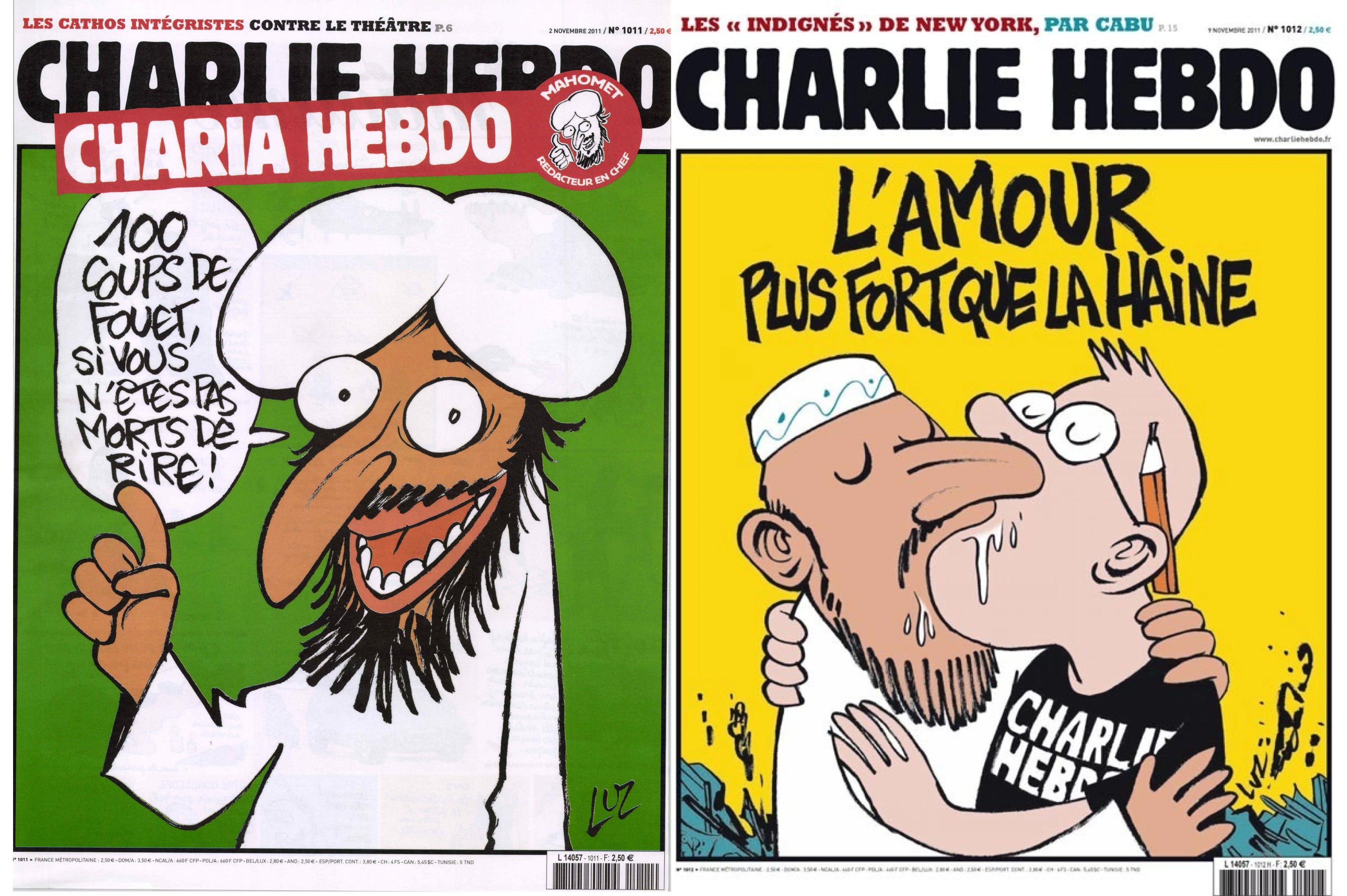
The 2015 massacre at Charlie Hebdo offered a violently crystalline illustration. Islamist gunmen entered the Paris offices of a satirical magazine and murdered eight members of its staff over cartoons depicting the Prophet Muhammad, ultimately killing 12 people. Yet when PEN America subsequently decided to give Charlie Hebdo its Freedom of Expression Courage Award, six prominent writers withdrew from the gala in protest. Eventually, more than 200 writers signed a letter objecting to the honor. The controversy produced the remarkable spectacle of a literary free-expression organization having to defend an award for courage to writers who had just watched their colleagues murdered for publishing offensive cartoons. Salman Rushdie, who knew a thing or two about being threatened with death for offending religious sensibilities, saw the danger. He accused the protesting writers of becoming “fellow travelers” of extremists seeking to intimidate writers into silence.
Before 2015 was over, the other half of the cycle arrived with almost grotesque precision. Donald Trump, campaigning for the Republican presidential nomination, responded to fears of terrorism by calling for a “total and complete shutdown” of Muslims entering the United States. Not Islamists or suspected extremists, but Muslims.
There, in miniature, was the trap Harris had described. One faction had difficulty discussing an illiberal ideology without shifting attention toward the vulnerability of the people associated with it. Another was perfectly willing to discuss the threat, and increasingly unwilling to distinguish ideas from people at all.
People on the left could point at Trump and say: “See? This is where all this talk about Islam leads.” The populist right could point at events like the Charlie Hebdo slaughter and say: “See? These people won’t even defend their own civilization when someone murders cartoonists.” Both sides possessed real evidence for their fears about the other, and both were helping make the other stronger.
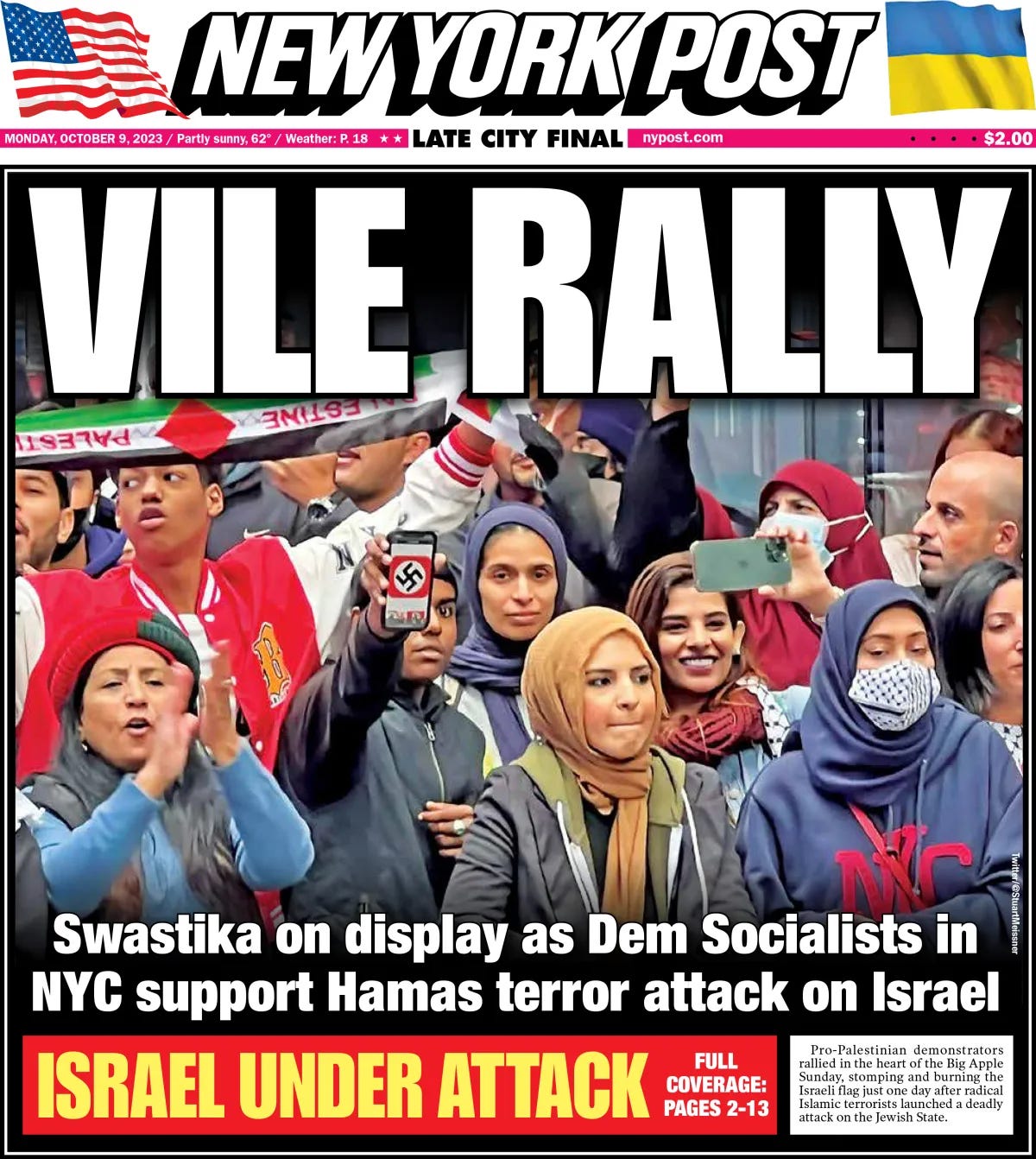
What happened after October 7, 2023, took this combustible dynamic and doused it in gasoline. Hamas’s attack presented the left with what should have been a straightforward moral test. Hamas was an Islamist terrorist organization and the governing power in Gaza. On October 7, its fighters deliberately massacred civilians, took hostages, and committed atrocities that no political cause could justify. Condemning those acts required neither hostility toward Palestinians nor collective blame of Muslims. Nor did defending Palestinians from collective blame require contextualizing, rationalizing, or celebrating what Hamas had done. Yet some of the most visible responses on the activist and academic left surfaced almost immediately, before Israel’s subsequent war in Gaza could possibly have provided their justification.
On the day of the attack, a statement eventually signed by more than 30 Harvard student organizations declared that they held “the Israeli regime entirely responsible” for the unfolding violence. Even though several groups later withdrew their signatures and thousands of other Harvard students, faculty, and alumni condemned the statement, the attitudes expressed by those student groups were fast growing. Indeed, in the hours and days that followed the attacks, left-wing activists took to social media to express solidarity with the assailants and flocked to the streets to stage rallies in support of Hamas.
Many examples were difficult to attribute to mere confusion or an excessive concern about appearing insensitive. National Students for Justice in Palestine described the attack in a “Day of Resistance” toolkit as Palestinian freedom fighters having “stormed” the border and “re-entered 1948 Palestine.” The document called for demonstrations across American campuses while the scale of the massacre was still becoming clear. Days later, Black Lives Matter Chicago posted an image declaring “I stand with Palestine” beneath the silhouette of a paraglider, an unmistakable reference to one of the methods Hamas attackers had just used to enter Israel. The chapter subsequently deleted the image.
This was not simply the product of a leftist reluctance to criticize an oppressed population. It reflected a genuinely anti-liberal political tradition in which violence can be understood as legitimate “resistance” when directed against a state or social order classified as colonial or imperial, regardless of the regime the resistance itself seeks to create. That classification can obscure an elementary liberal question: resistance toward what, and in favor of what? Hamas is not fighting to replace Israel with a more liberal society. It is an Islamist movement whose own political vision is authoritarian and theocratic. Whatever one believes about Israel’s conduct, history, or treatment of Palestinians, describing the October 7 attacks simply as “anti-colonial resistance” substitutes the relative power of the combatants for judging the political values they actually represent.
The same worldview helps explain why rhetoric such as “globalize the intifada” became commonplace at subsequent demonstrations. Some protesters insist that they intend the slogan in the broader sense of a generic uprising (which is what “intifada” translates to). But the phrase inevitably evokes the Palestinian intifadas, particularly the Second Intifada, during which suicide bombings and other attacks deliberately killed Israeli civilians on buses, in restaurants, and in other public places. To call for that struggle to be “globalized” is, at the very least, rhetoric whose violent implications are impossible to dismiss simply because every person chanting it may not consciously intend them.
That distinction will matter throughout this story. Some people on the left were reluctant to condemn Islamist extremism because they feared contributing to anti-Muslim prejudice or believed criticism should be subordinated to concern for Palestinians. Others came from political traditions that were never especially committed to liberalism in the first place. For them, groups like Hamas could be interpreted less by their theocratic politics than by their position in a global struggle against Israel, the United States, and the Western liberal order. The two reactions can look similar from the outside, but they arise from very different commitments. The conflict itself offers another grim illustration of the same mechanism Harris saw in America: Palestinian terrorism and rejectionism have repeatedly strengthened increasingly illiberal elements of the Israeli right, while Israeli hardliners and policies hostile to Palestinian self-determination have strengthened Palestinian rejectionists in return.
The institutional response only deepened the impression of moral confusion. Two months after the attack, the presidents of Harvard, the University of Pennsylvania, and MIT appeared before Congress and were asked whether calling for the genocide of Jews would violate their universities’ rules against bullying and harassment. Their answers equivocated that harassment depended on context and whether speech crossed into actionable conduct. That distinction has a legitimate free-speech basis, but the spectacle of university presidents repeatedly declining to give an unqualified “yes” was politically devastating — especially given that they would surely have done so if the group under threat had met the progressive left’s criteria for being considered “marginalized.” Penn president Liz Magill resigned days later.
By the spring of 2024, campus protests against Israel’s war in Gaza had spread nationwide. The underlying concerns about Palestinian civilian casualties and the conduct of Israel’s military campaign were valid subjects of protest. But the movement also generated incidents of intimidation, anti-Semitic rhetoric, political violence, and escalating disorder.
These attitudes escaped campuses and entered electoral politics. Anger over the Biden administration’s support for Israel fractured parts of the Democratic coalition during the 2024 election. The Uncommitted movement mobilized Democratic primary voters against Biden and later declined to endorse Kamala Harris while also explicitly opposing Trump and discouraging its supporters from voting for third-party candidates. Arab and Muslim voters in Michigan who had traditionally supported Democrats nevertheless moved away from Harris in significant numbers, with some voting for Trump, some choosing third-party candidates, and others simply staying home. Trump ultimately carried Dearborn, Michigan, a heavily Muslim city Biden had won overwhelmingly four years earlier, amid widespread anger over Gaza.
Whether that rupture was decisive in Harris’s defeat is impossible to know. Her loss had many causes, and Gaza should not be made to carry more explanatory weight than the evidence permits. But it clearly intensified tensions between the party establishment and its pro-Palestinian left and cost Democrats support among constituencies they needed. The irony was difficult to miss: a movement furious that the Biden-Harris administration had been too supportive of Israel helped weaken the coalition opposing Donald Trump, whose approach to Israel and the Palestinians would prove considerably less sympathetic to their aims.
The political consequences were entirely predictable. Trump and other Republicans seized on the protests as evidence of chaos under Democratic governance, while Republican campaign organizations prepared advertisements tying vulnerable Democrats to the unrest. Trump promised a crackdown and revived proposals to deport foreign students involved in what he characterized as pro-Hamas activity. The feedback loop was no longer theoretical. Radical rhetoric and institutional failure on the left were supplying political ammunition to an ever more illiberal right, which responded in ways that would soon give the left its own evidence that repression had been the real agenda all along.
The symmetry is not that the underlying claims are equally true or the conduct equally serious. It is that both forms of politics erase distinctions that liberalism requires us to maintain. The anti-liberal left can turn a simplified classification of one group as oppressed into moral permission for conduct it would condemn elsewhere. The post-liberal right can turn the existence of genuine extremists within a protest movement into permission to treat the movement itself as extremist. That is how a relatively small number of radicals can acquire political importance far beyond their numbers. The activist who celebrates “resistance” becomes evidence that everyone marching for Palestine secretly supports Hamas. The politician who treats pro-Palestine protesters as terrorist sympathizers becomes evidence that concern about Hamas or anti-Semitism was always merely a pretext for suppressing Palestinian advocacy. People who reject both propositions become less visible than the factions shouting them. The political dividing line that matters most begins to disappear: not Palestinians against Israelis, Muslims against Jews, or left against right, but liberals against illiberals within every one of those camps.
October 7 therefore did more than reopen an old argument about Islamism. It accelerated the mechanism Sam Harris had warned about and demonstrated how easily that machinery could consume the political space between its extremes. The next development would make the problem still harder to dismiss: ideas once primarily associated with activist groups, campuses, and online subcultures were beginning to intersect much more directly with electoral politics.
Hasan Piker offers perhaps the clearest illustration. Piker is not a Democratic politician. He’s a socialist livestreamer with an online audience of more than 10 million followers across platforms and many times that in monthly views. But his political role can no longer be described as merely that of an internet provocateur commenting from outside electoral politics. He has interviewed Senator Bernie Sanders and Representative Alexandria Ocasio-Cortez, appeared in the political orbit surrounding Mayor Zohran Mamdani’s rise in New York, and has increasingly used his enormous reach to promote democratic socialist candidates. In April, he went further, campaigning alongside Abdul El-Sayed and Representative Summer Lee at two Michigan universities as El-Sayed sought (and won) the Democratic nomination for the United States Senate. A figure who might once have been dismissed as an internet celebrity has become a campaign surrogate and influential participant in the ecosystem surrounding an insurgent democratic socialist left.
His views also make unusually visible the anti-liberal tendency described earlier. In an April 2026 appearance on Pod Save America, Piker was asked about his claim that Hamas was “a thousand times better” than Israel. He did not retreat from it. “I do mean it,” he said, while also describing the comparison as a rhetorical move. He went further: “I’m a lesser evil voter, and therefore I would vote for Hamas over Israel every single time.” Asked subsequently about that statement by CNN, Piker said he did not support all of Hamas’s actions and acknowledged that Hamas had committed war crimes, but defended a Palestinian right to armed resistance. Piker has also infamously stated that America “deserved” 9/11, said that it “doesn’t matter” if Israelis were raped by Hamas terrorists on 10/7, referred to Orthodox Jews drafted into the Israeli military as “untrained and inbred”, and described Zionists as “bloodthirsty violent pig-dogs.”
This is not merely an overabundance of concern about appearing Islamophobic. Nor is it ordinary advocacy for Palestinian civilians, opposition to Israeli policy, or criticism of Benjamin Netanyahu. Hamas is an Islamist organization whose rule in Gaza has been repressive and authoritarian, whose social politics are profoundly illiberal, and whose fighters deliberately murdered civilians on October 7 and paraded Israeli corpses through the streets. Preferring such an organization to a democratic state because the conflict is interpreted primarily through a framework of anti-colonial or anti-imperialist struggle displays a different political phenomenon from liberal discomfort about criticizing Islam.
This alliance between segments of the revolutionary left and political Islam is not new. During the Iranian Revolution of 1979, Marxists and other leftist opponents of the Shah joined the larger revolutionary coalition that brought down his government. The alliance, however, proved catastrophic for them. Once Ayatollah Khomeini and his supporters consolidated power, the new Islamic Republic violently suppressed many of the leftists who had helped destroy the previous order. Yet the underlying temptation survived: when politics is organized principally around opposition to Western imperialism, anti-Western regimes can acquire an illusory moral halo despite embodying almost everything the Western left claims to oppose at home.
That tension has become newly relevant as Iran has again moved to the center of American politics. One can oppose war with Iran, Israeli military action, or American intervention against the Islamic Republic without minimizing what the regime itself is. Liberal opposition to war requires no such bargain. The Islamic Republic remains a theocratic authoritarian state that has brutally repressed dissent, subordinated women, and persecuted sexual and religious minorities. And yet, the left-wing silence over the plight of the Iranian people has been deafening, even while the regime murdered tens of thousands of protesters. A “progressive” politics that becomes consumed by the sins of Western democracies while turning a blind eye to the rampant illiberalism of their global adversaries has ceased to apply its principles universally.
What makes the present moment different can be seen in the Democratic Party’s growing embrace of figures like Piker and of democratic socialism more broadly. The border between a radical political subculture and typical Democratic electoral politics has become substantially more permeable — and Harris’s warning teaches us to take this development seriously. The problem is not that the Democratic Party has somehow become Islamist, or even that democratic socialism and Islamism are ideologically compatible. They plainly are not. The problem is that an anti-liberal politics can create strange alliances organized around a common enemy. Meanwhile, a much larger cohort I call dissonant liberals — who remain basically liberal but have trouble telling the difference between fellow liberals and the illiberal actors in their midst — often become reluctant to police that boundary because they think the people crossing it are on their side. Once that happens, the political right does not need to invent the resulting examples. It merely needs to display them and say “See?”
The political appeal is easy to understand. A voter watches activists rationalize October 7, hears a prominent left-wing influencer say he would choose Hamas over Israel, watches universities struggle to enforce their own rules, observes the increasingly toxic online ecosystem of left-wing anti-Zionism, and concludes that something has gone badly wrong. Then the populist right arrives with an answer: “We see it too. We are willing to stop it.” The problem is what comes bundled with the offer.
Donald Trump previewed the right-wing populist approach during the 2024 campaign, vowing to deport foreign-born campus radicals whose anti-Israel activism could be spun as aiding Hamas. Once returned to office in January 2025, Trump ordered federal agencies to identify legal authorities that could be used against post-October-7 campus anti-Semitism. The White House explicitly promised action against “pro-Hamas vandalism and intimidation” and emphasized the removal of resident aliens who violated American law. The distinction between punishing unlawful conduct and punishing political advocacy soon became much harder to maintain.
Mahmoud Khalil, a Columbia graduate and lawful permanent resident who had become a prominent figure in the university’s pro-Palestinian protests, was detained by immigration authorities in March 2025 as the administration sought to deport him. The government argued that his presence could have adverse foreign-policy consequences. Khalil was later released after a federal judge found his detention unconstitutional, although the complex litigation over his deportation has continued through the immigration and federal courts.
One need not agree with Khalil’s politics to see the liberal problem. The government possesses legitimate authority to prosecute violence, threats, material support for terrorism, and other unlawful conduct. Deporting a legal permanent resident because the executive branch regards his political advocacy as contrary to American foreign policy is an altogether different proposition. The first protects a liberal order from people who violate its laws. The second risks making political conformity a condition of remaining within it.
A similar expansion can be seen in Project Esther, the Heritage Foundation’s 2024 strategy for combating anti-Semitism. The document begins with a genuine problem: Hamas is a terrorist organization, anti-Semitism surged after October 7, and some American activists really did cross the boundary from criticism of Israel into apologetics for terrorism or hostility toward Jews. But Project Esther labels a sweeping American “pro-Palestinian movement” part of a “Hamas Support Network” and proposes denying organizations access to campuses, restricting demonstrations, and removing foreign members of targeted organizations from the country.
Nor is this expansion merely a feature of the Trump administration’s response to the protests. It reflects a broader permeability between overtly anti-liberal ideas and mainstream politics on the right. Curtis Yarvin, the neoreactionary writer formerly known by the pseudonym Mencius Moldbug, spent years on the outer fringes of online politics arguing that American democracy should be dismantled and replaced by something closer to corporate monarchy. His ideas no longer seem quite so quarantined. Vice President J.D. Vance has cited Yarvin by name while advocating a version of his proposal to purge the federal bureaucracy. Vance also suggested that a president confronted by an adverse Supreme Court ruling might simply defy it — a strategy Yarvin proposed to help break the existing constitutional order and replace it with a radically more centralized regime.
Nor is the resemblance confined to bureaucratic reform. Vance has argued that conservatives should make culturally left-leaning corporations “feel real economic pain”, and has proposed using government power against progressive foundations. Vance need not adopt Yarvin’s entire program for Yarvin’s influence to matter, any more than Democratic politicians need to adopt Piker’s worldview for Piker’s growing political role to matter. Explicitly anti-liberal ideas do not need majority support to matter. They need access to a larger coalition whose members may tolerate increasingly illiberal means because they believe the other side poses the greater threat.
The same expansion of categories and powers reached Harvard. The university had genuine problems with anti-Semitism, something Harvard president Alan Garber himself acknowledged while promising stronger action. The Trump administration responded by freezing billions of dollars in research funding and later restricting entry by foreign students seeking to study there by invoking anti-Semitism, campus disorder, and national security concerns. Then came the other half of the story. In September 2025, a federal judge ruled that the administration had acted unlawfully in canceling more than $2 billion in Harvard research grants and restored Harvard’s eligibility for the grants. Last month, another federal judge dismissed an administration lawsuit alleging that Harvard had failed to protect Jewish and Israeli students, finding that the government had not plausibly established the ongoing Title VI violation it alleged.
There, almost perfectly, is the feedback loop in institutional form.
A real failure occurs. Activists cross liberal boundaries. Institutions hesitate to respond, sometimes because they have difficulty distinguishing an illiberal faction from a constituency they believe themselves obligated to protect. The resulting public anger creates political demand for someone who will act decisively. An illiberal actor answers that demand, but does not restore the missing distinctions. He erases them in the opposite direction, using genuine extremism to justify powers that reach political speech, immigration status, university autonomy, and other liberal protections.
And then the left gets to say, “See?”
The repression is real. The threat to political dissent is real. The right truly has taken legitimate concern about anti-Semitism and Islamist extremism and used it to justify measures that extend considerably beyond either problem. That makes it easier to believe the original concern was merely a pretext, easier to dismiss the next warning about extremism, and harder for liberals on the left to draw boundaries against their own radicals without appearing to assist an administration they reasonably distrust. Each side has once again furnished the other with evidence, and around the loop goes.
The leftist response, in turn, created still more evidence for the other side. If you already believed that accusations of anti-Semitism were merely a device for silencing criticism of Israel, watching the federal government threaten university funding or attempt to deport protesters made your theory considerably easier to sell. If you already believed that talk of Hamas sympathizers was simply an excuse for suppressing the pro-Palestinian movement, the arrest of foreign students over political activity could look like confirmation.
The populist right really does contain people willing to erode liberal constraints in the name of defeating their enemies. When they do so, they strengthen precisely the people on the left who insist that liberal restraints were never adequate to begin with. The sequence becomes almost self-sustaining. Islamist violence helps anti-liberal activists justify their hostility toward Israel and the West. Their apologetics and excesses help the populist right portray liberal institutions as incapable of defending themselves. The populist right acquires power and uses it more aggressively than liberal principles permit. Then its own excesses help the anti-liberal left portray the liberal order itself as fraudulent.
And at every stage, the people most committed to maintaining the distinctions necessary for a liberal society become harder to hear.
There is good news buried inside this diagnosis. There is a liberal way out of all this. The people driving the feedback loop are not representative of the societies they are pulling apart. Most Americans still endorse the core institutions of liberal democracy. Surveys continue to find broad support for the rule of law, free speech, and fair elections, while a record 45 percent of Americans now identify as independents rather than members of either major party. The liberal center may be frustrated, internally diverse, and increasingly homeless within partisan politics, but it has not disappeared.
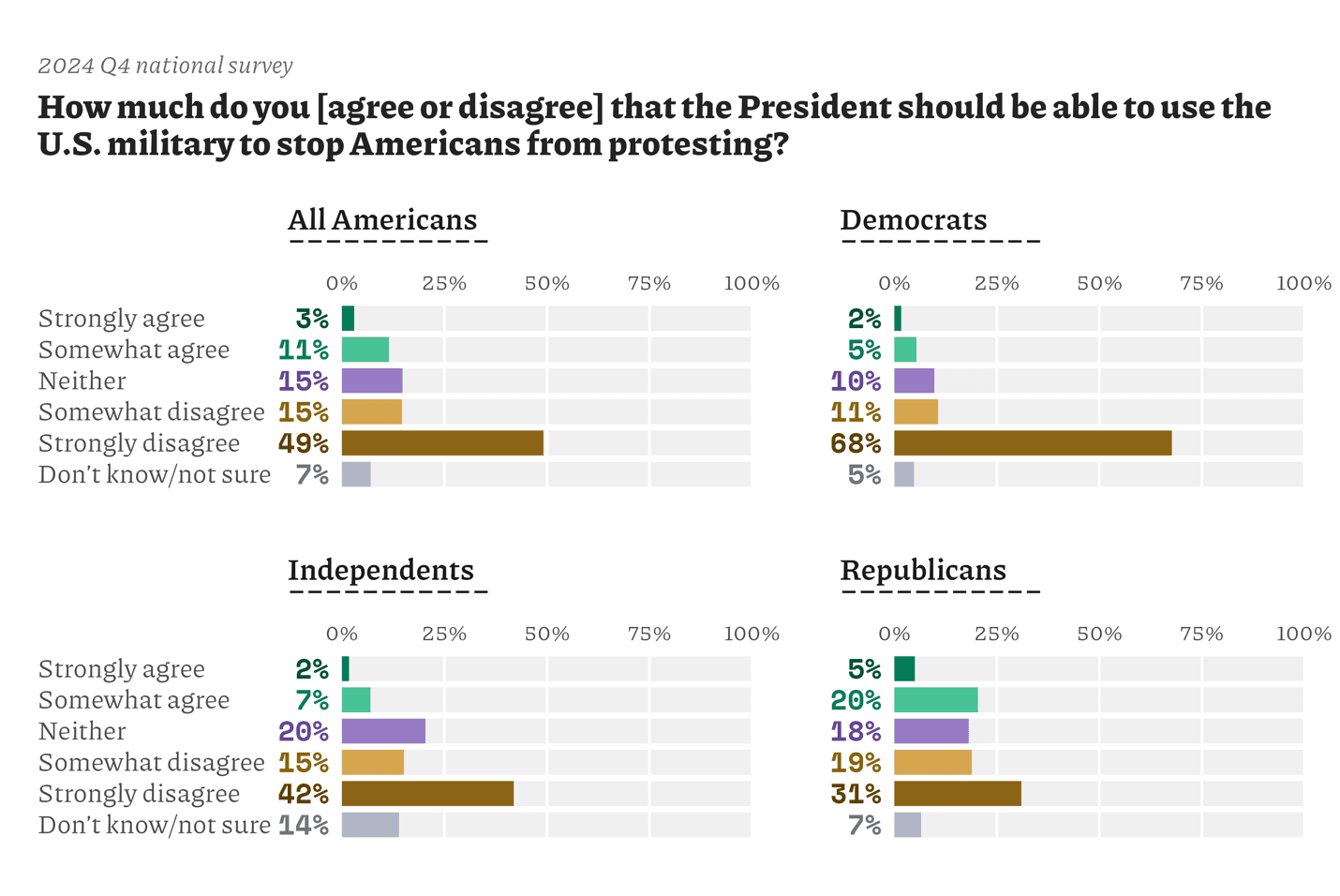
That matters because the problem at hand is not that an illiberal majority has taken over, but that organized and intensely motivated subsets can exercise influence far beyond their numbers. Meanwhile, the broadly liberal majority enters the political process too late, too inconsistently, or not at all. That asymmetry is not mysterious. People generally satisfied with the basic rules of a society have less reason to organize around defending those rules than people dissatisfied with them have to organize for change. Moderates are also dispersed across parties and among independents, while ideological factions can concentrate their influence inside the institutions where nominations, endorsements, and agendas are decided.
For decades, much of the liberal majority could afford to treat the bedrock constitutional order as background rather than a political cause. As overtly illiberal movements have grown and the establishments that once constrained them have weakened, that assumption has become more dangerous. The feedback loop does not merely radicalize opinion. It exploits the places where a relatively small number of people can decide what choices everyone else will eventually be offered.
American primary elections are an obvious example. By the time most voters encounter two candidates in a general election, an enormous amount of political selection has already happened. Candidates have been recruited, funded, endorsed, and nominated by electorates that are much smaller and more extreme than the public at large. In 2016, Donald Trump demonstrated just how consequential that can be. He entered a crowded Republican field and ultimately won the nomination with only 44.9 percent of Republican primary votes. Across both parties, meanwhile, the entire presidential primary season drew only 28.5 percent of eligible voters.
Trump never needed to persuade a majority of Americans to make him the Republican nominee. He didn’t even need to persuade a majority of Republicans. He merely needed a sufficiently large and cohesive plurality in a fragmented field. Once he became the nominee, the structure of partisan politics did much of the remaining work. In the general election, 92 percent of Republican voters backed him. The dissonant liberal does not have to decide that attacks on constitutional norms are good. He can tell himself that Hillary Clinton is worse, that Democrats pose the greater threat, that the candidate is exaggerating, or simply that partisan loyalty leaves no acceptable alternative. By the time that calculation is being made, much of the relevant battle has already been lost.
This is one reason the liberal response cannot simply be an appeal for everyone to become less partisan. It has to change where and when people participate. A voter who cares about liberal institutions cannot afford to wait until November to discover that both parties have nominated candidates he regards as dangerous. A voter may also strategically participate in a party primary even if it’s not the party of their choice. Voting in a party primary does not obligate one to support that party in the general election. A liberal conservative can vote against an authoritarian candidate in a Republican primary and still vote against the Republican nominee in November. A liberal progressive can do the equivalent on the Democratic side. If preserving liberal democracy is genuinely prior to ordinary policy disagreement, then candidate selection has to reflect that priority.
Of course, primary elections are not uniquely responsible for polarization, and the party-boss politics that preceded the modern system should not be naïvely romanticized. But the current presidential nominating system is not some hallowed democratic institution handed down by the founders. Presidential primaries began during the Progressive Era and became central to nominations only after party reforms in the 1970s. If the system routinely rewards ideological intensity over broad representativeness, liberals should be willing to consider reforms that give candidates with wider constituencies a better chance to survive the selection process. That could mean changes to primary rules, greater participation, ranked-choice systems, anti-gerrymandering reforms that produce more competitive districts, stronger recruitment of candidates before primaries begin, or restoring some legitimate role for parties as institutions responsible for identifying people capable of winning and governing.
This is where dissonant liberals become more than an explanation of the problem. They are also the constituency capable of solving it. Dissonant liberals can be found on both the left and the right, and they are different from the smaller, explicitly anti-liberal movements operating within both coalitions. They generally still believe in elections, pluralism, free expression, equal rights, constitutional restraints, and the rule of law. These are the same people who may hesitate to condemn Islamist illiberalism because they fear reinforcing anti-Muslim politics, or overlook abuses of government power because the targets appear sympathetic to Hamas. Their failure comes when those commitments become costly because defending them requires opposing someone on their own side.
The point, then, is not to convert dissonant liberals into liberals. They already are liberals. It is to make acting on those commitments more politically consequential than defecting from them when tribal pressure becomes intense. That means voting earlier, supporting candidates who respect liberal institutions even when one disagrees with them on ordinary policy, refusing to treat party nominations as foregone conclusions, and withholding votes, money, or institutional legitimacy from politicians who regard democratic restraints as obstacles to be discarded.
The most valuable boundary-setting often has to come from within a coalition. A progressive criticizing an anti-liberal leftist and a conservative criticizing an authoritarian rightist can reach people who would dismiss the same criticism from an ideological opponent. Refusing to police one’s own side might seem like a way to preserve political strength, but it can only do so temporarily, while granting the most organized faction the power to define what the coalition becomes.
This is also where the liberal alternative must be more than centrism. Liberalism does not require splitting every disagreement down the middle, and it certainly does not require pretending that every combatant is equally culpable. Rather, it requires applying the same political rules regardless of whose interests they presently serve. Does a political actor accept losing an election? Do they recognize the legal rights of their opponents? Do they defend free expression when the speaker is offensive? Does a movement distinguish peaceful political opposition from intimidation and violence? Does it accept that rights belong to individuals even when those individuals are members of a powerful, unpopular, or politically inconvenient group? Those are the same standards that allow liberals to defend Muslims while opposing Islamism, support Palestinians while opposing Hamas, and oppose anti-Semitism without turning criticism of Israel into a forbidden category of speech.
The same principle applies beyond domestic politics. Liberalism does not assign moral virtue according to which country, religion, or ethnic group possesses less power. It begins from universal human rights. A democratic state does not become innocent merely because its enemies are dictators, but neither does an authoritarian movement become righteous merely because it fights a stronger democratic state. Liberals should prefer societies in which governments can be removed by elections; the social, economic, and political rights of individuals are protected; criticism of rulers is permitted; and neither majorities nor minorities are permitted to subordinate individuals to their own political purposes. Power, history, and context matter, but none of them replaces the question of what kind of political order is actually being defended. That’s why the relevant political dividing line ultimately runs through both sides of the political aisle rather than neatly between them. Liberalism has progressive and conservative expressions, religious and secular ones, social-democratic and laissez-faire ones. People can disagree profoundly about taxes, welfare, immigration, foreign policy, abortion, guns, Israel, or almost anything else while remaining participants in the same liberal political order. What they cannot do is reserve democratic rights and constitutional restraints only for the moments when those restraints favor their own side.
The way out of the loop is therefore not for everyone to agree, but for the liberal majority to stop surrendering the points of leverage at which disagreement is converted into illiberal power. That requires something many moderates have historically had little reason to do: organize in defense of political rules they assumed would endure without them. This means participating before the general election, voting in primaries, and rewarding politicians for principled compromise across party lines instead of allowing them to be punished for it by their own factions. It means reforming democratic institutions that allow small ideological electorates to monopolize candidate selection. It means supporting people on the other side when they defend liberal rules against their own extremists. Most of all, when an illiberal actor asks you to overlook one more violation because the alternative is supposedly worse, recognize the bargain for what it is.
The extremes do not have to defeat the liberal majority if the liberal majority repeatedly chooses between them. They only have to make that choice seem inevitable. The most important thing liberals can do is refuse to wait until it is.
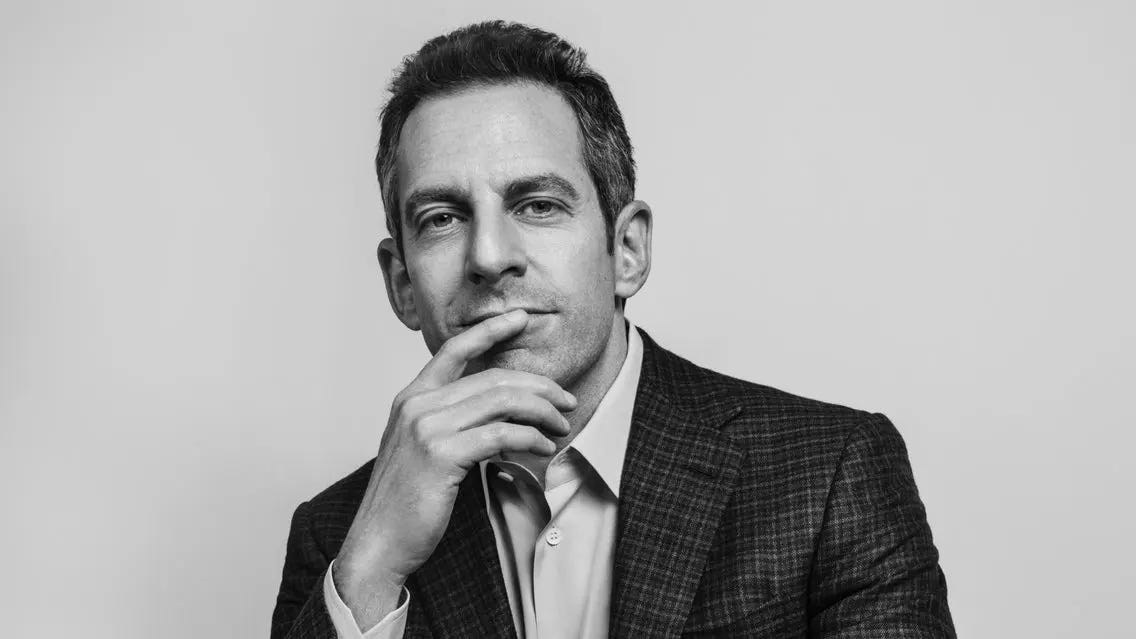
This brings us back to Sam Harris. More than two decades ago, his warning was focused on a specific failure: liberals becoming unable to distinguish criticism of Islamist ideas from prejudice against Muslims as people. If they continued down that path, he warned, ordinary people confronting a real threat would eventually turn toward political forces with fewer liberal scruples. They did. But the significance of the warning is larger than the political fortunes of any particular party — larger even than the argument over Islam that produced it. Harris identified one of the ways liberal societies surrender political ground: when liberals abandon a legitimate concern because confronting it has become politically uncomfortable, they do not remove that concern from politics. They cede it to people with fewer liberal restraints who then vindicate liberals’ political discomfort, and thus the feedback loop begins.
This mechanism can shape more than a single issue. It can shape entire coalitions. Intensely committed minorities can define the choices offered to everyone else, while a much larger liberal public arrives only after those choices have hardened. The danger is therefore not merely that liberals will lose an argument. It is that they will surrender the pressure points at which arguments become political power.
Immigration offers an especially clear example. Most Americans have consistently favored some combination of border enforcement and a legal pathway for at least some people living in the country illegally, even as Republican politics moved toward mass deportation and progressive activists and presidential candidates entertained proposals such as moratoriums on deportation. Policing produced a similar distortion after George Floyd’s murder. Americans overwhelmingly believed policing needed reform, and large majorities have supported concrete measures to hold officers accountable for misconduct, but only a minority wanted to reduce police funding. “Defund the police” nevertheless became an influential demand on the activist left, while resistance to that movement helped a law-and-order right portray demands for police accountability more generally as hostility toward the police.
Something similar has happened since the extraordinary liberal victory of same-sex marriage. Americans remain broadly supportive of LGBT equality and protections against discrimination, with 68 percent supporting same-sex marriage in 2025, even as progressive activists have pushed into much more contested areas involving gender identity, children, and sex-based distinctions. Public opinion has meanwhile moved substantially toward restrictions on several transgender issues, and the resulting backlash has empowered a political right more than willing to reopen questions about LGBT rights that liberals had thought settled. In each case, the substantive issues are different. The structural danger is the same: positions that command intense support from organized minorities can acquire political importance far beyond their overall public support. And because each coalition increasingly defines itself against the excesses of the other, one side’s overreach can make the other side’s overreach easier to defend. Positions that many voters might otherwise reject become tolerable, or even necessary, because conceding the underlying problem appears to mean strengthening the enemy.
This is not to say that every position outside the political mainstream is automatically illiberal. The point, rather, is recognizing what can happen when intensely committed minorities acquire enough leverage to define what a much larger coalition must defend or oppose. The liberal majority does not have to accept that choice. Its task is not to split every difference or retreat to the middle of every dispute. Its task, as Sam Harris pointed out, is to defend liberal principles early enough, consistently enough, and at the points of leverage that matter, so that no faction can claim a monopoly on confronting real problems simply because everyone else was afraid to touch them. If liberal democracy is to survive the 21st century, it will require breaking this feedback loop.
Rio Veradonir is the former editor in chief of Queer Majority and co-author of the forthcoming book The Reasonable Majority from Pitchstone.
See also: “How to Deradicalize DEI”
Subscribe now and never miss a new post. You can also support the work on Patreon. Please consider sharing this article on your social networks, and hit the like button so more people can discover it. You can reach me at @AmericnDreaming on Twitter, @jamie-paul.bsky.social on Bluesky, or at AmericanDreaming08@Gmail.com.

I do not see the issue with banning immigration of men from countries governed by Sharia law. Why should we allow such immigration here? Being allowed to enter the US is a privilege, and until men who are followers of fundamentalist Islam change the hateful, violent, misogynist cultures and practices of their home countries, it is perfectly reasonable to say, "We will not allow you to come to the United States." There is nothing illiberal about this. As for women from such places, I believe such a ban should not apply as women do not benefit from living under and perpetuating such a hateful culture.
The issue I have with this argument and Harris is the idea that Islam is still a major issue to American politics. Sure liberals idea of relative morality within cultures is contradicting but since 9/11 The US has killed millions of innocent people in the middle east that are not part of Al Qaeda.
How come this isn't mention in the article?
The greatest threat to world freedom and security is the right wing Republican party.
Anyone that thinks Muslim ideas are dangerous or more so than the current state of the republican party is allowing emotions to dictate their thinking.
Trump in less than two years as president has destabilized trade relations with American allies. He has made it normal to lie about the integrity of our elections. He has made it normal to see masked policy kidnapping and murdering Americans without consequences.
Has basically surrendered to Putin, has threaten invasion of allies and has kidnapped a leader of a country without a act of war declared from Congress. He is currently engaged in an unconstituional war and faced no consequences trying to steal the 2020 election.
Even when Trump eventually dies the republican party, the voters and Trump's actions without accountability create the enviroment for a man that is far more intelligent that Trump and willing to take advantage of a Republican party that no longer believes in American values.
Over the next 10 years we are far more likely to see war, death and instability in the world due to the direction of the Republican party and the power they would have access too.
To sit here and ignore the death and destruction the west has caused following 9/11 is the same thing we are doing now with Israeli causing death and destruction following OCt. 7.
Liberals rationalizing Hamas is nothing compared to Repulican party, from voters to Congress to the President to the Supreme court that no longer believes in civility and freedom of their political opponents.
A Republican Supreme Court provided the President with immunity despite it not existing in the constitution.
What threat does Muslims offer the world that isn't dwarfed by an America that is slowly but surely becoming a fascist state?