


This post is by contributor Jacob Bielecki.
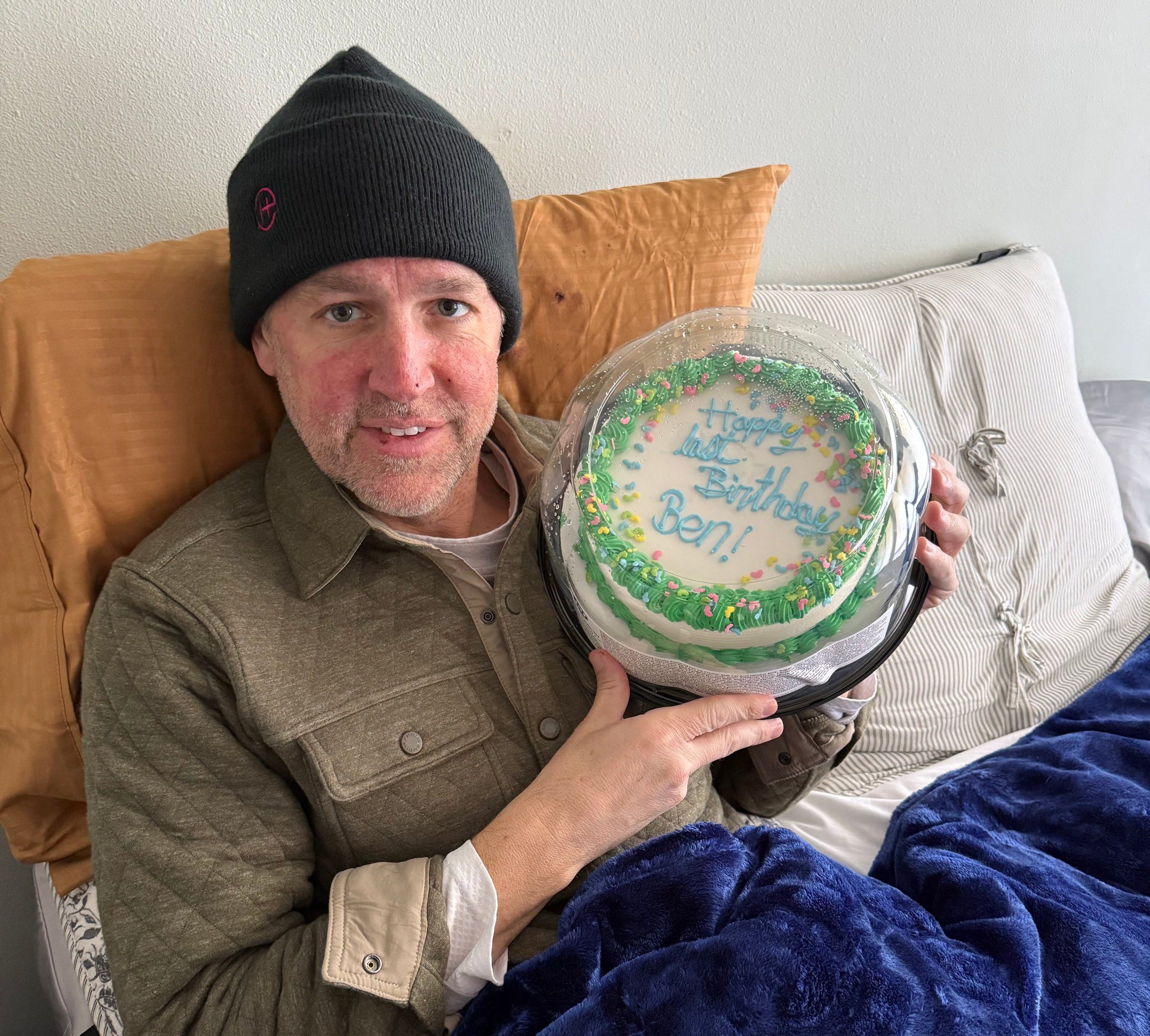
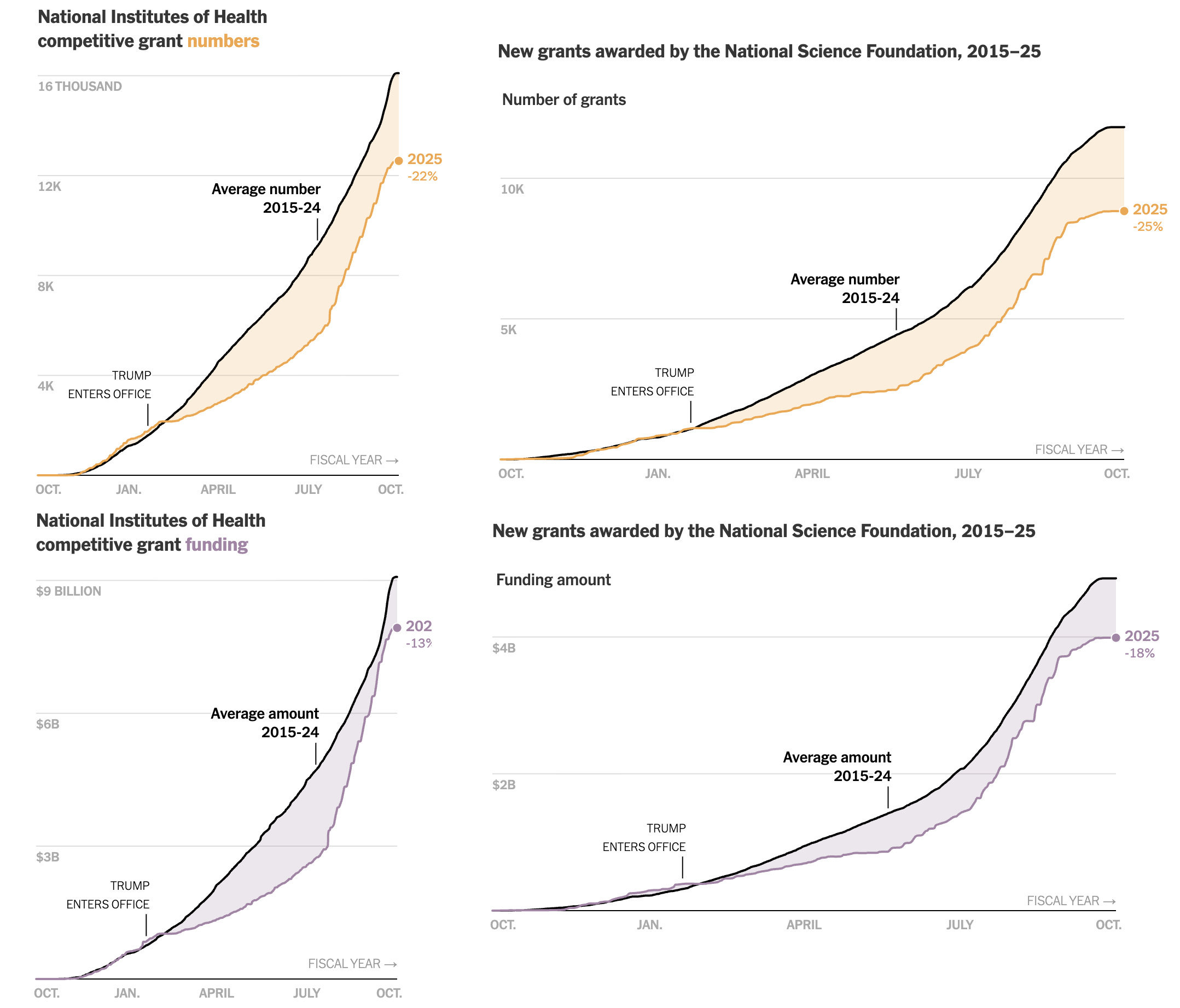
In December 2025, Ben Sasse, former Republican Senator from Nebraska (2015–2023), announced that he had been diagnosed with stage 4 pancreatic cancer at age 53. What should have been a life expectancy of three to four months, however, has turned into something else for Sasse. He’s been taking Daraxonrasib, an experimental drug that has not only slowed the cancer’s growth but has reversed its progression. The groundwork for Daraxonrasib was laid by government-funded research — the very type of research that was cut when the Republican majorities in the House and Senate passed the One Big Beautiful Bill Act in 2025. 7,800 grants were discontinued or cut as $32 billion overall was slashed from scientific research, with the single largest cut being Northwestern University’s Lurie Cancer Center, one of America’s leading cancer research institutions.
Sasse has given several interviews since his diagnosis, including with conservative New York Times Columnist Ross Douthat, with Scott Pelley of 60 Minutes, and with Sola Media, a Christian media organization. In a widely shared clip of his Sola interview posted on social media, Sasse said his tumors have shrunk by 80 percent and the cancer cells in his blood have declined by 99 percent. Sola has since removed the clip, clarifying that while Sasse was responding well to treatment, his diagnosis was still terminal. Just about all of Sasse’s post-diagnosis interviews have been ideologically friendly puff pieces. To say that Sasse has been served nothing but softball questions would be an extreme understatement. Still, it is to be expected. Ours is a culture that treats death, or impending death, as a kind of moral absolution that elevates all but the most heinous beyond reproach. For this reason, no one wants to raise the only question Ben Sasse should be asked right now: would you have voted to cut the medical research funding that is now prolonging your life?
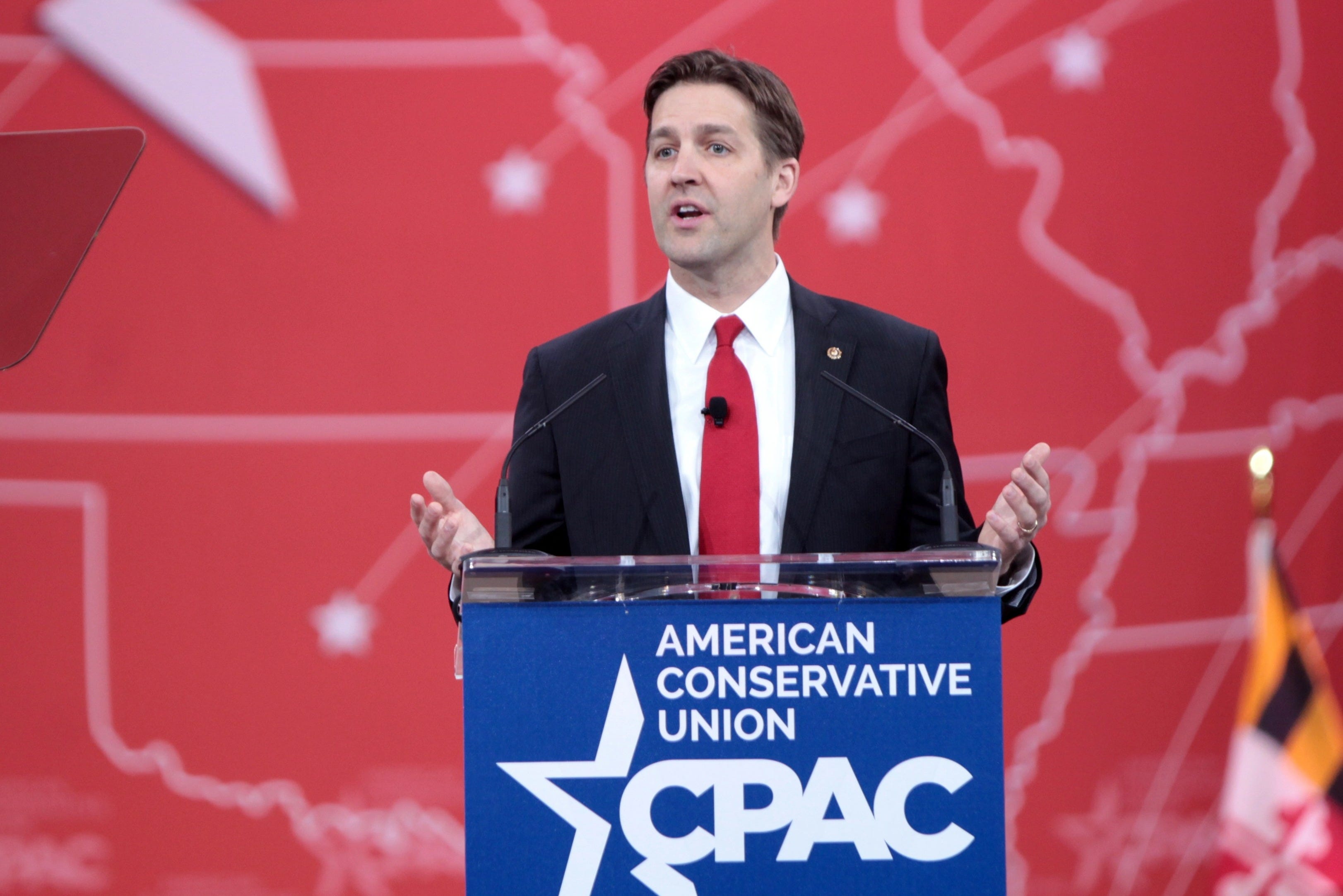
Ben Sasse rose to prominence during Donald Trump’s first campaign for President in 2015–2016. The press, eager to lionize any Republican who spoke out against Trump, made Sasse a media darling when he announced he would not support Trump if he became the Republican Party’s nominee. Sasse criticized Trump for refusing to denounce his Ku Klux Klan endorsement and said that Trump “thinks he’s running for King” in a Facebook post. Yet, when Trump won the GOP nomination for President, Sasse could not bring himself to endorse Hilary Clinton. When Donald Trump was impeached for the first time — after phone call transcripts were leaked showing that he demanded Ukrainian President Volodymyr Zelenskyy produce dirt on then–candidate Joe Biden, while withholding military aid to Ukraine — Sasse voted not to convict on the grounds that removing the President would be too divisive for the country.
January 6th was the final straw for Sasse. When Trump was impeached a second time, Sasse was one of seven Republican Senators who broke rank and voted to convict. Of those seven senators, only three still hold office. In response to his vote, the Scotts Bluff County Republican Party voted to censure Sasse, and its chair, Kolene Woodward, wrote an open letter addressed to him stating, “You were elected to represent the people of Nebraska who overwhelmingly voted for President Trump. Your actions are a selfish, political ploy.” She also expressed her disappointment that Nebraska does not allow Senators to be recalled. The Nebraska State Republican Party, which voted to censure Sasse in 2016 for criticizing Trump, likewise voted to censure him again after he supported the articles of impeachment. Sasse didn’t even bother serving the remainder of his term. He resigned from the Senate in January 2023 after being hired as president of the University of Florida. Whatever plans Sasse may have had for his future were disrupted by cancer, a disease that also helped shape the politics of the era.
“Ending cancer as we know it” was one of President Joe Biden’s strongest initiatives. The goal the Biden administration set with this “Cancer Moonshot” was to cut cancer deaths in half by 2047 by “Protecting 100 million Americans from exposures to per- and polyfluoroalkyl substances (PFAS), known as forever chemicals, and taking action to decrease smoking, the single largest driver of cancer deaths.” The Moonshot expanded early cancer detection programs to millions of Americans, created the Advanced Research Projects Agency for Health (ARPA-H) to research better ways to detect and treat cancer, and enacted policies to help make treatment more affordable.
Fighting cancer was a personal matter for Joe Biden, whose son Beau died in 2015 from brain cancer two years after his diagnosis. Biden attributed his son’s cancer to Beau having been stationed near a burn pit while serving in the Iraq War in 2008–2009 and being exposed to toxins. Several months after leaving office, Biden himself was diagnosed with metastatic prostate cancer that had spread to his bones, which may explain why his gait grew increasingly stiff during his presidency.
It appears, at least for now, that Joe Biden and Ben Sasse are unlikely fellow travelers in their cancer journeys, as their respective treatments have gone better than anyone could have expected. Biden received radiation and hormone therapy and is making regular public appearances, giving speeches, and has written a memoir, while Sasse’s fight with pancreatic cancer has already blown past his doctors’ initial predictions. Sasse’s statements about how his cancer has nearly vanished from his blood call to mind the advancements that have been made in the treatment of HIV. Those living with HIV can be treated with antiretroviral therapy (ART) drugs which decrease their viral load to the point where HIV cannot be detected on a blood test, meaning they cannot spread the disease. The drugs also prevent HIV from progressing into AIDS. Because of ART, the life expectancy for people living with HIV is now comparable to the rest of the population. This was the goal of Biden’s Cancer Moonshot: to transform cancer into a manageable condition that allows people to live normal lives. The Trump administration’s budget cuts have made that dream more distant.
This brings us back to the original question: Would Ben Sasse have voted to cut the cancer funding that’s prolonging his life? Looking through his political career, Sasse’s voting record on medical research funding has been mixed. In his first term in the Senate, Sasse voted for the 21st Century Cures bill, which provided billions of dollars in additional funding for the National Institutes of Health as well as for cancer and other medical research. Additionally during the COVID-19 pandemic, Sasse voted for the CARES Act, an emergency pandemic funding bill that passed the Senate 96-0. But Sasse has also voted against a number of spending bills that cumulatively included hundreds of billions in funding for healthcare and medical research, such as the Consolidated Appropriations Acts of 2016, 2018, 2020, 2022, and 2023.
For over a decade, the media has portrayed Sasse as a wise and honorable sage of constitutional conservatism who took a principled stand against Trumpism. Aside from Rand Paul, Thom Tillis, and Susan Collins, every Republican senator voted for the One Big Beautiful Bill and every Democrat voted against it. Republicans who have criticized Trump in the past, such as the recently deceased Lindsey Graham, Mitch McConnell (who is still alive as of this writing), and Lisa Murkowski all voted to pass the bill. What would Sasse have done? It’s a simple question. This is the same Ben Sasse who said that the Affordable Care Act was “the worst law in our history” during his first Senate campaign. However, Sasse was also the Assistant Secretary of Health and Human Services during the George W. Bush administration. He must surely know the important role government-funded research plays in developing new treatments for cancer and other diseases. Would Ben Sasse have put his devotion to “small government” conservatism aside to vote against medical research cuts?
Ben Sasse may be dying, but this is not an unfair question to ask. Unlike other prominent pancreatic cancer patients such as Patrick Swayze or Aretha Franklin, Sasse, up until very recently, had the power to change hundreds of millions of people’s lives. If he’s going to make the rounds on the interview circuit and tell the world what it’s like to be living on borrowed time, the public deserves to know whether he is serious about winning the war on cancer.
See also: “We Won’t Prevent Your Cancer, You Have To Start Dying First”
Subscribe now and never miss a new post. You can also support the work on Patreon. Please consider sharing this article on your social networks, and hit the like button so more people can discover it. You can reach me at @AmericnDreaming on Twitter, @jamie-paul.bsky.social on Bluesky, or at AmericanDreaming08@Gmail.com.

.jpg)